Teacher burnout can make you crave one thing more than anything else – coming home to a space that feels like yours again.
Some afternoons I walk through the front door still carrying the noise of the school day in my body. Not literally, of course. But it’s there. The fluorescent lights. The constant questions. The feeling of being mentally “on” for hours at a time. Sometimes I don’t even realise how tense I am until I hear the quiet of my own house.
And honestly? There have been days where that first moment at home has felt almost emotional.
The sound of the kettle boiling. Lamps instead of harsh overhead lights. A blanket thrown over the couch exactly where I left it that morning. No bells. No duty roster. And no one asking me to solve a problem immediately.
Just space.
I think that’s why I’ve become so attached to slow living, cozy corners, thrifted furniture, and creating a home that feels calm. Teaching can make life feel incredibly functional. You spend so much of the day managing systems, behaviour, time, expectations, emails, conversations, and tiny emergencies that your nervous system forgets what softness feels like.
So coming home stops being a routine.
It becomes recovery.
Not in the “quit your job and move to the mountains” kind of way. More in the quiet way. The way you stand in your kitchen making toast slowly while the house is peaceful. The way you sit in an old armchair scrolling antique marketplace listings like it’s a personality trait. Or even the way changing into comfortable clothes can feel like shedding an entire version of yourself for the evening.
And maybe that sounds silly to people outside teaching.
But I don’t think teachers talk enough about how important it is to have somewhere that reminds you who you are outside the job.
A space that feels personal, soft.
A space that asks nothing from you for a little while.

The relief of not being needed for a minute
One of the strangest parts of teaching burnout is how rarely your brain gets to fully unclench.
Even during lunch breaks there’s usually something happening. Someone needing help. Someone waiting outside your classroom. A conversation in the staffroom. A playground issue. An email you forgot to answer. A lesson you’re mentally rehearsing while pretending to eat yoghurt peacefully at your desk.
And honestly, motherhood can feel similar in its own way. Someone always needing something or asking a question through the bathroom door. Someone talking to you while you’re already trying to think about six other things.
You become so used to being available that your body starts expecting interruption constantly.
I noticed this properly one afternoon when I came home and just stood in my kitchen in complete silence. No TV on or music. No scrolling. Nothing.
And instead of relaxing immediately, I felt restless.
Like I should be doing something.
Answering something.
Preparing something.
That was probably one of the first moments I realised teaching had trained my nervous system to stay slightly alert all the time.
And I think a lot of mothers understand that feeling too. The strange guilt of sitting down while everyone else is still moving around. The feeling that rest has to be earned somehow.
Which is why coming home to a calm space matters more than people think.
Not because your house has to be perfect. Honestly, mine definitely isn’t. There are unfolded clothes on chairs half the time and random school papers floating around like escaped fugitives. But there are small things that help me feel human again when I walk through the door.
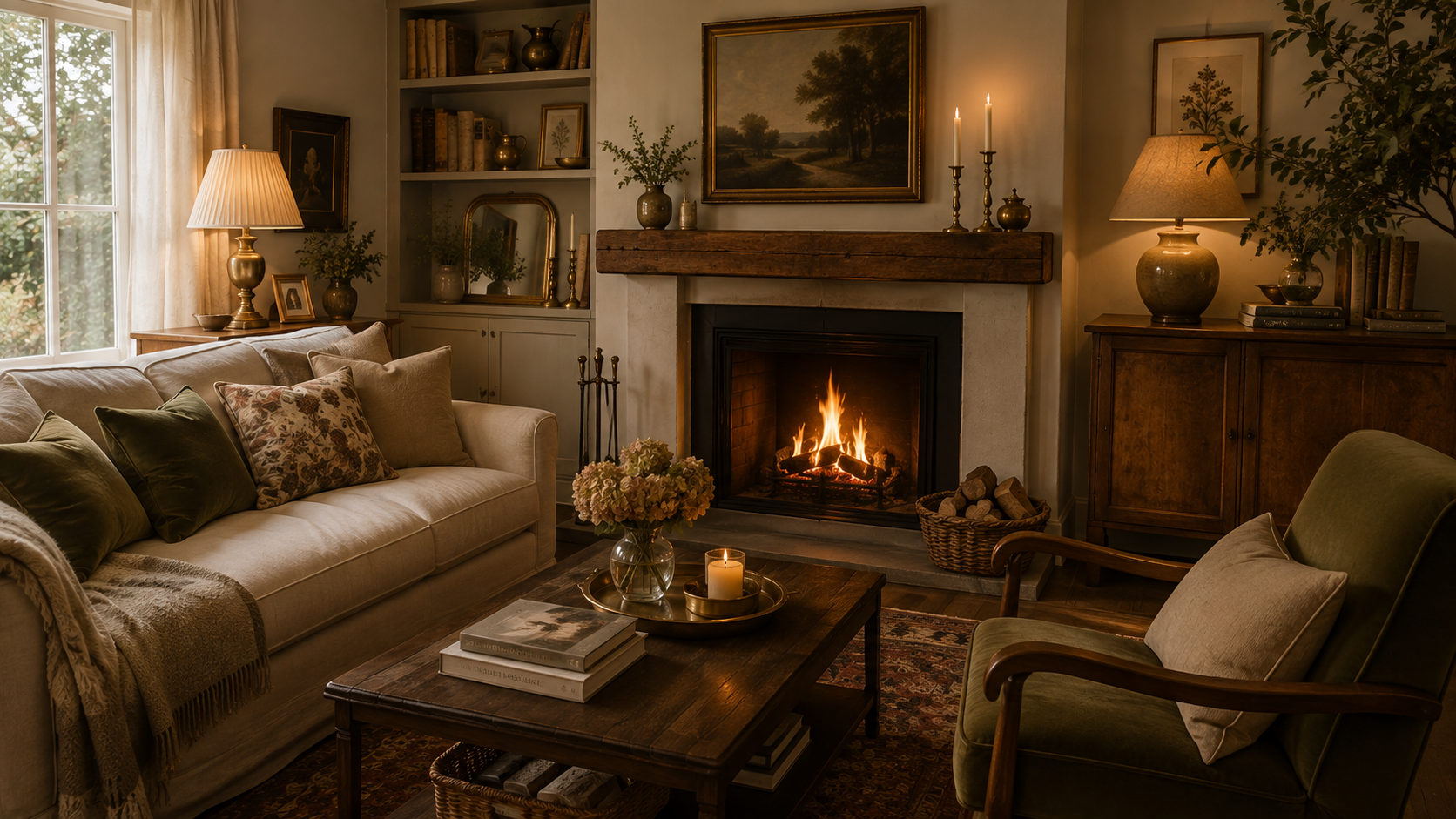
Warm lamps.
Soft blankets.
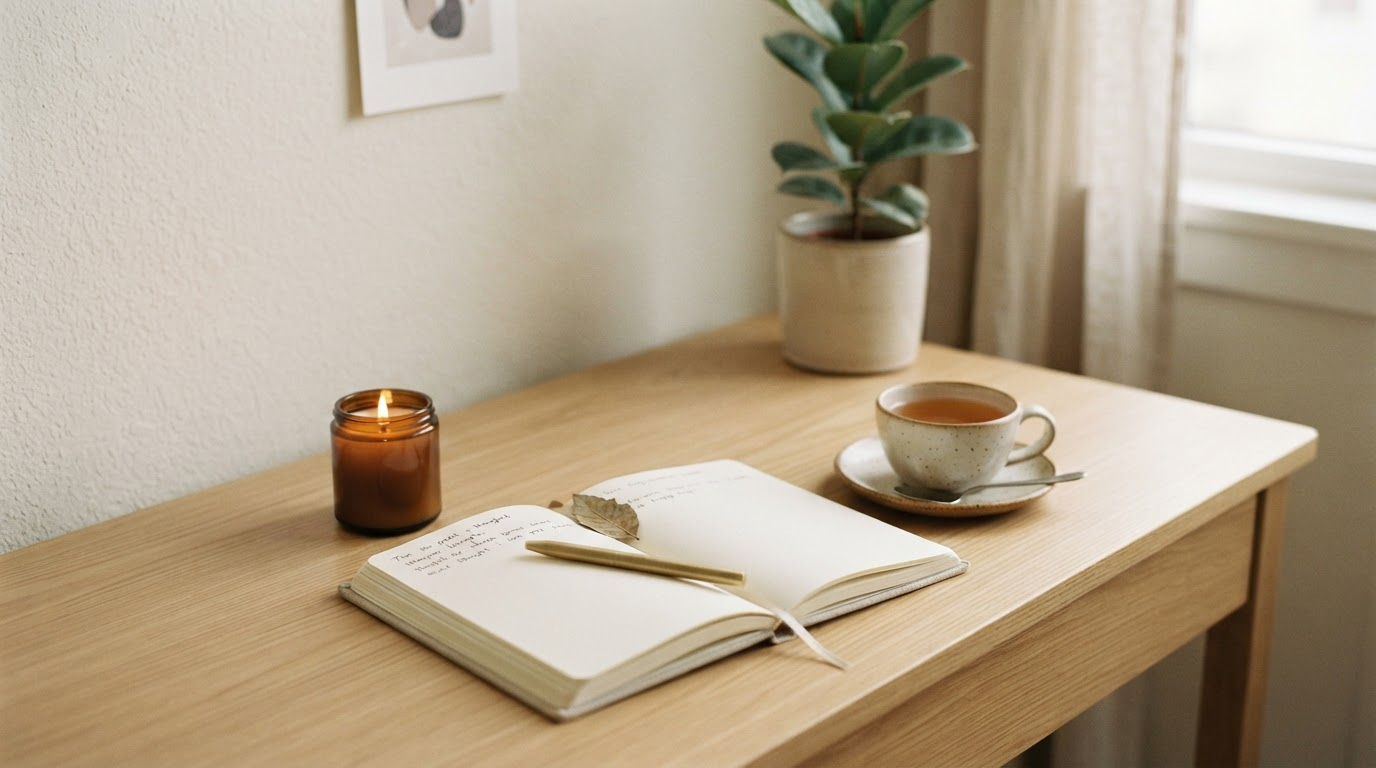
A candle lit in the late afternoon.
A quiet room.
My favourite old mug.
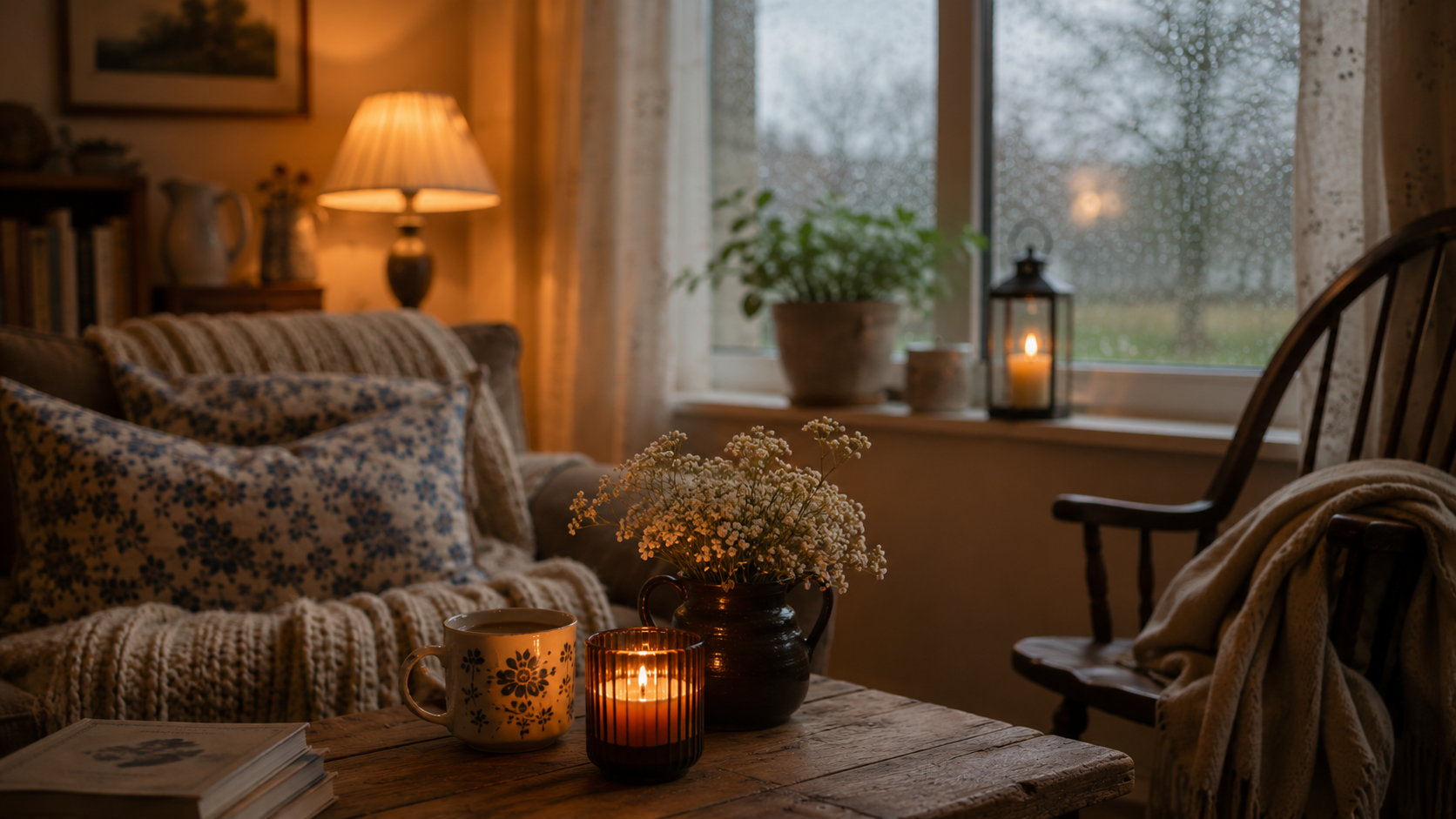
The sound of rain against the windows if I’m lucky.
Tiny things.
But tiny things matter when your day has felt loud.
Sometimes I think teachers need what I call a “landing space.” Somewhere that signals to your brain that the performance part of the day is over. Somewhere that reminds you that you don’t have to manage every second anymore.
Picture this for a moment.
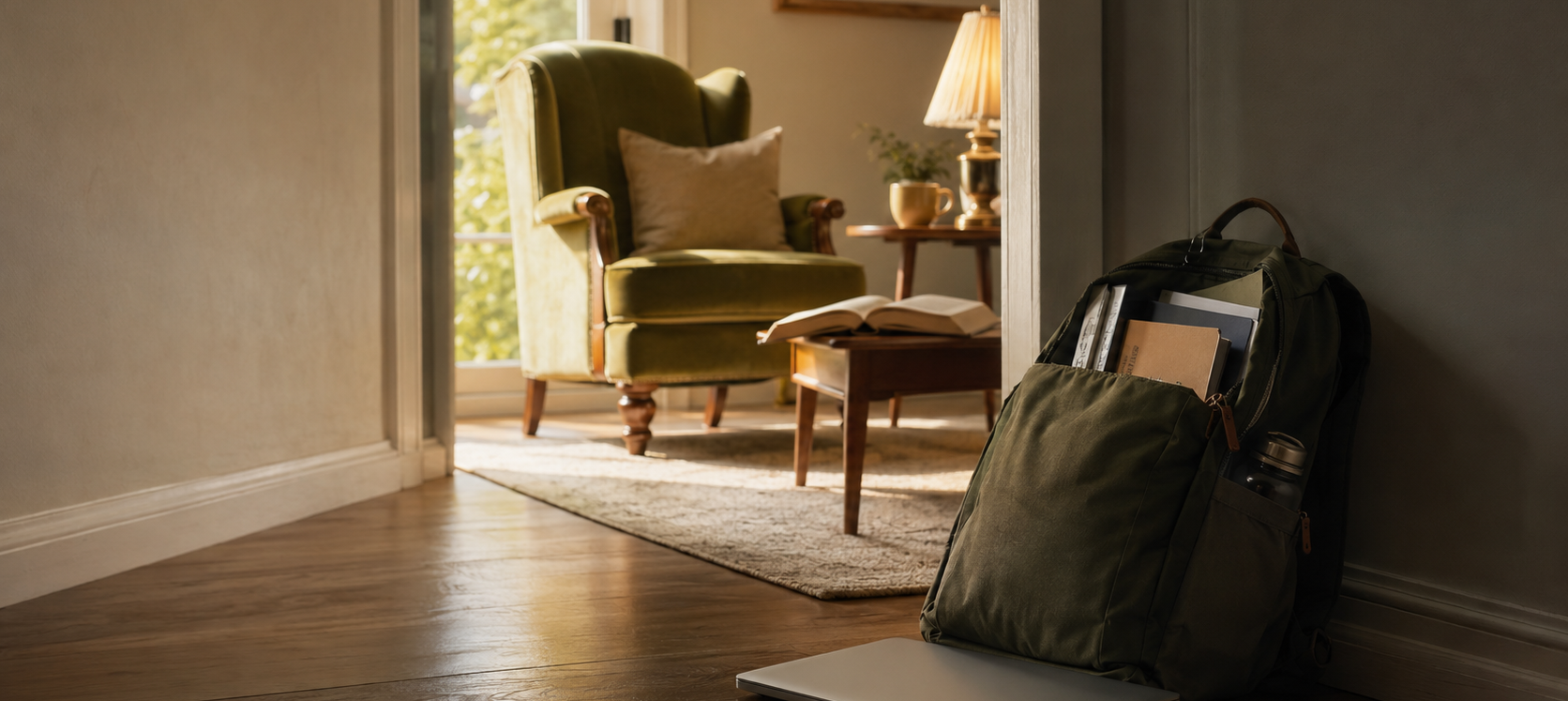
You walk through the door after work and immediately put your school bag away instead of leaving it beside you all evening like a warning sign. You change into comfortable clothes. The overhead lights stay off and a small lamp glows in the corner instead. Dinner is simple. Maybe embarrassingly simple. Toast, soup, leftovers, cereal if the term has really won.
And for twenty minutes, nobody needs anything from you.
That feeling matters more than we give it credit for.

A few small things that have genuinely helped me create that sense of relief:
- taking my lanyard off the second I get home
- changing clothes immediately
- putting my school bag out of sight
- turning lamps on before it gets dark
- keeping one corner of the house tidy and cozy, even if the rest isn’t
- making a cup of tea before opening my laptop again
- sitting in silence for ten minutes before doing chores
None of these things magically remove burnout.
But they do help create small pockets of calm inside a life that can otherwise feel very overstimulating.
Home as proof you still exist outside teaching
I think one of the hardest parts of long-term teaching burnout is how easily the job can swallow your identity without you fully noticing it happening.
You become the organised one.
The reliable one.
The one remembering excursions, appointments, permission slips, assessment dates, sports uniforms, behaviour plans, grocery lists, and whether there’s any milk left in the fridge.
And if you’re a mother too, that mental load can feel almost relentless at times.
Some days it feels like your brain belongs to everybody else before it belongs to you.
That’s why I think creating a home that reflects your personality matters more than people realise.
Not in a Pinterest-perfect way.
Just in a deeply personal way.
For me, it’s vintage lamps. Old wooden furniture. Soft lighting. Stacks of decorating books I keep meaning to read properly. Blue and white china. Half-finished cozy corners that make me happy even if nobody else notices them.
Tiny reminders that I’m still a person outside productivity.
Because burnout can make you forget that.
You start functioning instead of living.
You spend so much time getting through the week that you slowly lose touch with the parts of yourself that used to feel interesting, creative, relaxed, or hopeful. And sometimes the loss happens so gradually you don’t even notice until one day you realise you can’t remember the last time you did something just because you enjoyed it.
That’s why little personal rituals at home matter.
Browsing antique shops on a Saturday morning.
Rearranging a shelf for no real reason.
Reading in bed early.
Watching old movies.
Lighting a candle while folding washing.
Listening to quiet music while making dinner.
Not because these things solve burnout.
But because they reconnect you to yourself a little.
Picture this.
It’s early evening. Dinner dishes are done or mostly ignored. The house is quieter now. A lamp is glowing in the corner beside a thrifted chair you almost didn’t buy. Your phone is somewhere else for once. There’s a blanket over your legs and absolutely no urgency in the room.
And for a moment, you remember there is a version of you that exists outside school timetables, permission slips, and constant responsibility.
That version still matters.

A few gentle ways to reconnect with yourself again at home:
- display things you genuinely love, even if they’re old or imperfect
- create one cozy corner that feels calming to walk into
- stop saving your “good” candles, mugs, or blankets for special occasions
- listen to music that has nothing to do with productivity
- spend time on hobbies that don’t need to become side hustles
- let your home reflect who you are now, not just who you used to be before life became busy
Sometimes I think the reason so many teachers become drawn to slow living is because we spend so much of our working lives moving at the pace of systems, bells, and expectations.
Home becomes the place where we can finally return to our own pace again.
The tiny rebellion of creating softness anyway
There’s something quietly rebellious about creating a soft life when the world around you keeps rewarding exhaustion.
Teaching can make efficiency feel like the most important thing about you.
The speed at which you answer emails and the amount you can juggle.
Your ability to stay flexible no matter what gets thrown at you.
The extra pressure you can absorb without visibly falling apart.
And motherhood can carry that same pressure too. Keeping everyone organised. Remembering everything. Holding the emotional temperature of the house together even when you’re exhausted yourself.
After a while, life can start feeling incredibly functional.
You stop asking yourself what feels calming or beautiful or meaningful because you’re too busy keeping things running.
Which is why I don’t think cozy homes are frivolous the way some people make them out to be.
I really don’t.
I think there’s something healing about walking into a room with warm lighting instead of harsh brightness. About putting clean sheets on the bed midweek just because you need comfort. About buying an old thrifted lamp for ten dollars that makes your evenings feel softer somehow.
Those things matter.
Not because they fix burnout.
But because they remind you that your wellbeing deserves attention too.
I used to think slow living had to mean dramatic lifestyle changes. Quitting your job. Moving to the countryside. Growing herbs in tiny ceramic pots while birds magically land on your windowsill like a Disney movie.
Turns out sometimes slow living looks much less impressive than that.
Sometimes it looks like reheated leftovers eaten from your favourite bowl while rain taps against the windows.
Other times it’s saying no to more work after dinner, even when the guilt tries to creep in.
And sometimes it’s simply leaving the washing until tomorrow because your brain cannot handle one more thing today.
And honestly, I think that counts.
Picture this.
You come home after a draining day and instead of immediately opening your laptop, you turn on a lamp. You straighten a small corner of the room. Maybe you light a candle that smells faintly like vanilla or cedar. The house isn’t spotless. Nobody in your family is standing around in linen smiling softly while acoustic music plays in the background.
Real life is still happening.
But there’s softness inside it now.
And sometimes that tiny shift is enough to help you breathe again for the evening.

A few ways I’ve learned to create softness during hard seasons:
- using lamps instead of overhead lighting at night
- keeping cozy blankets where everyone can actually use them
- thrifting decor slowly instead of trying to make the house perfect all at once
- making simple routines feel comforting instead of rushed
- letting home feel lived-in instead of presentation-ready
- protecting one small peaceful ritual each evening
- reminding myself that rest is productive too, even when nothing visible gets done
I think exhausted teachers often underestimate how much their environment affects them.
When your work life feels overstimulating and demanding, even a small amount of softness at home can feel surprisingly grounding.
The fantasy of having your own time again
I don’t actually think most burned out teachers are fantasising about doing nothing. I think what they’re really craving is ownership again – ownership of their time, their thoughts, their evenings, their weekends, and their energy.
There’s a particular kind of exhaustion that comes from feeling like your entire life is divided into timetables, obligations, and countdowns to the next school holidays. After a while, you stop moving through your week naturally and start surviving it in chunks.
And when you’re balancing motherhood as well, free time can start to feel almost imaginary. Even the moments that are supposed to feel restful somehow become productive too – cleaning, organising, planning, driving, cooking, remembering who needs what tomorrow.
Sometimes you finally sit down at night and realise the whole day belonged to other people.
I think that’s why so many teachers become emotional over very ordinary things like a quiet cup of coffee, an empty house for an hour, or a Saturday morning with nowhere urgent to be. It’s not laziness. It’s relief. Relief from constantly feeling mentally and emotionally “on.”
For a long time I thought wanting a slower life meant I lacked ambition somehow. Like everyone else was climbing toward bigger careers and busier schedules while I was over here dreaming about antique shops, quiet mornings, soft lighting, and enough mental space to read a book properly again without falling asleep after two pages.
But the older I get, the more I realise peace is actually a very reasonable thing to want after years of living by bells, schedules, duty times, and constant emotional demand.
Picture this for a moment.
It’s Sunday afternoon and you’re not spending the entire day mentally bracing for Monday morning. There’s no heaviness sitting underneath the evening and no feeling like the weekend disappeared in twelve minutes. You make tea slowly, wander around your home adjusting little corners, maybe read for a while, maybe nap, maybe do absolutely nothing productive at all.
And instead of guilt, there’s calm.
I honestly think that’s what a lot of exhausted teachers are craving deep down. Not some fantasy perfect life. Just enough breathing room to feel connected to their own life again instead of constantly racing through it.

A few things that have genuinely helped me protect my time and energy a little more:
- leaving school work in my bag some nights on purpose
- planning less on weekends instead of trying to “catch up” on life
- treating rest like a real need instead of something that has to be earned
- unfollowing content that makes slow living feel aesthetic instead of realistic
- creating evening routines that feel comforting rather than productive
- allowing myself to want a quieter life without feeling guilty about it
- remembering that meaningful lives do not always look busy from the outside
Sometimes I think slow living starts with a very simple decision – to stop treating your own life like something you’ll eventually get around to enjoying later.
Conclusion
I think that’s why coming home to a space that feels like yours matters so much when you’re a teacher.
Not because a cozy house fixes burnout.
Not because vintage lamps and soft blankets magically remove stress.
And definitely not because life suddenly becomes peaceful all the time.
But because having a space that feels calm, personal, and grounding reminds you that you still exist underneath all the responsibility.
Underneath the emails.
The timetables.
The emotional labour.
The constant feeling of being needed.
And for mothers balancing both teaching and family life, that reminder can become even more important. When so much of your day revolves around caring for other people, even small moments of softness and quiet can feel surprisingly healing.
I think exhausted teachers sometimes underestimate how much they deserve comfort too.
Not luxury.
Not perfection.
Just small ordinary things that help life feel gentler.
Warm lighting in the evening.
A peaceful corner of the house.
A slow cup of tea after work.
A home that reflects your personality instead of your productivity.
Maybe that’s what slow living really is in hard seasons. Not escaping your life entirely, but learning how to create small pockets of calm within it while you figure out what comes next.
And if you’ve been feeling stretched thin lately, I hope this reminds you that creating a home that feels soft, comforting, and yours is not frivolous.
It’s a way of caring for yourself in a world that often asks teachers to give everything away.
N.B. As an Amazon Associate, I earn a small commission on qualifying purchases at no cost to you. Also, some of the images on this website were created with the help of AI.